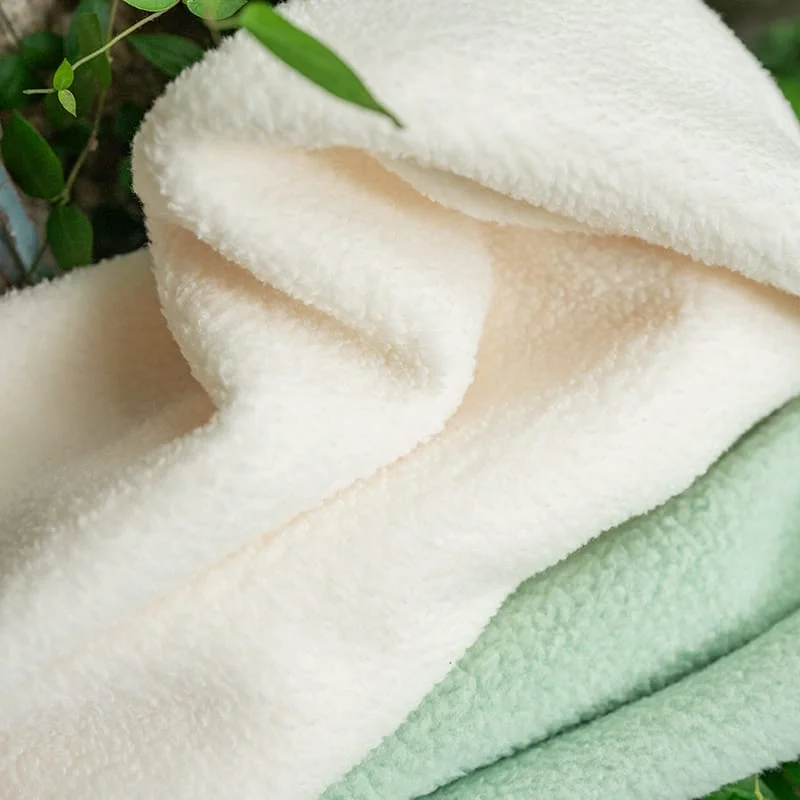
French Terry Fabric: B2B Sourcing Guide for Hoodies & Sweatshirts
Direct Answer
French terry is a knitted fabric with a smooth, flat face and distinctive looped (terry) interior. The unbrushed loops trap air for moderate insulation while allowing better breathability than brushed fleece. Weight ranges from 200-340gsm, positioning french terry between lightweight jersey and heavyweight fleece.
For B2B sourcing, the critical specifications are:
- GSM selection — Lightweight (200-240gsm) for spring/summer; medium (240-280gsm) for year-round; heavyweight (280-340gsm) for winter
- Loop construction — Consistent loop size and density affects warmth, hand feel, and pilling resistance
- Shrinkage — Cotton french terry shrinks 3-5%; polyester blends <2%. Specify pre-shrinking treatment for sizing consistency
French terry vs. fleece:
| Property | French Terry | Brushed Fleece |
|---|---|---|
| Interior | Looped (unbrushed) | Brushed/napped |
| Warmth | Moderate | High |
| Breathability | Better | Lower |
| Weight | 200-340gsm | 250-400gsm |
| Pilling | More resistant | More prone |
| Best season | Spring/summer/fall | Fall/winter |
TL;DR — Key Sourcing Takeaways
- French terry is NOT fleece: French terry has unbrushed loops; fleece has brushed/napped interior. Different products, different applications
- Loop consistency is quality indicator: Uniform loop size and density throughout roll = quality manufacturing
- GSM determines warmth and seasonality: 200-240gsm for warm weather; 280gsm+ for cold weather
- Shrinkage varies by fiber: Cotton shrinks 3-5% unless pre-shrunk; polyester blends shrink <2%
- Pilling resistance matters: French terry loops can pill with friction—request ASTM D3512 Grade 4+ for quality products
Table of Contents
- Why French Terry for Hoodies & Sweatshirts
- The 6-Step French Terry Selection Process
- French Terry Specification Comparison
- Questions to Ask Your Supplier
- Common French Terry Sourcing Mistakes
- Related Resources
- About Huada Creation's French Terry Capabilities
Why French Terry for Hoodies & Sweatshirts
French terry dominates the hoodie and sweatshirt market because it delivers the ideal balance of comfort, warmth, and breathability for year-round wear.
The comfort zone problem:
- Heavy fleece is too warm for indoor wear and active use
- Lightweight jersey provides no warmth
- Athletes and consumers want a versatile middle ground
How french terry solves it:
- Looped interior: Traps air for moderate insulation without excessive warmth
- Smooth exterior: Professional appearance, prints well, resists pilling
- Breathability: Unbrushed loops allow air circulation, preventing overheating
- Moisture management: Loops provide surface area for sweat absorption and evaporation
French terry applications:
- Hoodies and pullover sweatshirts
- Joggers and sweatpants
- Casual shorts
- Athleisure dresses
- Children's playwear
- Loungewear and robes
The 6-Step French Terry Selection Process
Step 1: Define Seasonality and Warmth Requirements
| Season/Use | GSM Range | Warmth Level |
|---|---|---|
| Summer/active hoodies | 200-240gsm | Light |
| Spring/fall transitional | 240-280gsm | Moderate |
| Year-round versatile | 260-280gsm | Moderate |
| Cool weather/outdoor | 280-320gsm | Warm |
| Winter layering | 300-340gsm | Maximum |
Step 2: Choose Fiber Composition
| Fiber Blend | Characteristics | Best For |
|---|---|---|
| 100% Cotton | Natural feel, soft, breathable; shrinks 3-5% | Premium casual, sensitive skin |
| 80/20 Cotton-Poly | Balance of comfort and durability | General hoodies, better shape retention |
| 60/40 Cotton-Poly | Reduced shrinkage, faster drying | Activewear hoodies, athletic brands |
| 95/5 Cotton-Spandex | Stretch for fitted styles | Athletic hoodies, joggers |
| 100% Polyester | Quick-dry, sublimation-ready; technical feel | Performance, team wear, sublimation |
| Poly-Spandex | Performance with stretch | Athletic french terry |
Step 3: Evaluate Loop Quality
Quality indicators:
- Consistent loop size across roll width
- Uniform loop density (no thin spots)
- Loops securely attached (don't pull out easily)
- Even height (no short/tall loop variation)
Quality test: Gently tug loops—they should resist pulling out. Visible loop variation indicates quality issues.
Step 4: Specify Shrinkage Requirements
| Fiber Type | Expected Shrinkage | Mitigation |
|---|---|---|
| 100% Cotton | 3-5% | Specify sanforized/compacted treatment |
| 80/20 Blend | 2-4% | Pre-shrinking reduces to <2% |
| 60/40 Blend | 1-3% | Usually stable |
| 100% Polyester | <2% | Inherently stable |
Always require: AATCC TM135 shrinkage testing before bulk production
Step 5: Assess Pilling Resistance
French terry loops are prone to pilling with friction. Specify minimum pilling grade:
- Grade 4-5: Premium products, expected durability
- Grade 3-4: Acceptable for value products
- Below 3: Not recommended
Request ASTM D3512 (Martindale) test reports.
Step 6: Consider Special Requirements
| Requirement | Solution |
|---|---|
| Soft hand feel | Enzyme wash, silicone softening |
| Anti-pilling | Special finishing treatment |
| Quick-dry | Polyester blend, wicking treatment |
| Eco-friendly | Organic cotton, recycled polyester (GRS) |
| Sublimation printing | 100% polyester, white base |
French Terry Specification Comparison
| Specification | Lightweight | Medium Weight | Heavyweight |
|---|---|---|---|
| GSM Range | 200-240gsm | 240-280gsm | 280-340gsm |
| Best Season | Summer, active | Spring/fall, year-round | Fall/winter |
| Warmth Level | Light | Moderate | High |
| Drape | Fluid | Balanced | Structured |
| Loop Height | Shorter | Medium | Taller |
| Applications | Summer hoodies, active | All-season hoodies | Winter sweatshirts |
| Typical Composition | Cotton-poly or poly | Cotton or blend | Cotton or 80/20 blend |
Questions to Ask Your Supplier
Fiber & Construction
- What is the exact fiber composition?
- Is this true french terry (looped back) or brushed fleece?
- What is the loop height and density specification?
- What yarn count is used for face and loop yarns?
Quality & Performance
- What is the pilling grade per ASTM D3512?
- What is the shrinkage rate per AATCC TM135?
- Is the fabric pre-shrunk/sanforized/compacted?
- What is the GSM tolerance? (±5% is standard)
Color & Finishing
- What is the colorfastness grade for washing? (AATCC 61)
- What finishing treatments are applied? (Softening, anti-pilling?)
- How many wash cycles before hand feel degrades?
- Is the fabric suitable for direct-to-garment (DTG) printing?
Sourcing & Logistics
- What is the MOQ per color?
- What is lead time for stock colors vs. custom colors?
- Can you provide lab dip samples before bulk production?
Common French Terry Sourcing Mistakes
Mistake 1: Confusing French Terry with Fleece
The problem: Ordering "fleece" when you want french terry, or vice versa. They're different products. The fix: Clarify: French terry = looped (unbrushed) interior. Fleece = brushed/napped interior. Inspect samples carefully.
Mistake 2: Under-Specifying Loop Quality
The problem: Loops vary in size, density, or pull out easily. Product appears cheap. The fix: Request loop consistency specifications. Inspect samples for uniformity. Tug-test loops.
Mistake 3: Ignoring Shrinkage for Cotton French Terry
The problem: Cotton french terry shrinks 3-5%. Size M becomes tight S after washing. The fix: Specify pre-shrunk/sanforized treatment OR size patterns up 4-5% to compensate. Always test.
Mistake 4: Choosing Wrong GSM for Climate/Activity
The problem: 300gsm french terry for summer activewear = too hot. 200gsm for winter = too cold. The fix: Match GSM to intended use. 200-240gsm for active/warm weather; 280gsm+ for cold weather.
Mistake 5: Not Testing Pilling on Loops
The problem: French terry loops pill quickly with backpack straps, seat friction, arm movement. The fix: Require ASTM D3512 Grade 4+ for quality products. Grade 3 is minimum acceptable.
Mistake 6: Using Cotton French Terry for Performance
The problem: Cotton absorbs moisture and dries slowly—not ideal for athletic hoodies. The fix: Use poly-blend or 100% polyester french terry for athletic/performance applications.
Related Resources
- Polyester vs. Cotton for Sportswear — Fiber selection for hoodies
- Understanding Fabric Weight: GSM Guide — Weight selection principles
- Brushed vs. Non-Brushed Fleece — French terry vs. fleece comparison
- Moisture-Wicking Fabric Guide — Performance properties
About Huada Creation's French Terry Capabilities
Production capacity: French terry in multiple weight classes GSM range: 200-340gsm available Fiber options: 100% polyester, poly-spandex, cotton-like polyester Certifications: OEKO-TEX Standard 100
French Terry Fabric Range
| Product Code | Composition | GSM Range | Loop Type | Best For |
|---|---|---|---|---|
| HD7978a | 100% Polyester (cotton-like) | 260-320gsm | Standard loop | Hoodies, sweatshirts, joggers |
| HD8066 | 100% Polyester | 240-300gsm | Brushed option available | Versatile hoodie fabric |
Why Our French Terry
- Cotton-like polyester technology: Soft hand feel with polyester performance
- Consistent loop quality: Uniform density and height across production
- Low shrinkage: <2% with polyester base
- Quick-dry properties: Polyester base enables moisture management
- Multiple weight options: 260-320gsm for different applications
Get a Quote for French Terry Fabric
Request a Quote — Include target GSM, fiber preference (cotton-like polyester recommended), and volume estimate. We provide shrinkage and pilling test data on request.
Browse Fleece & Terry Fabrics — View our french terry and fleece fabric range.