Running Apparel Fabric Guide: Moisture Management Explained
Running generates more sweat than almost any other activity, making fabric selection critical for comfort and performance. The wrong fabric creates a clammy, heavy, uncomfortable experience; the right fabric keeps runners dry, cool, and focused on their pace.
Critical Requirements for Running Fabrics
1. Moisture-Wicking (Essential)
What is Wicking?
- Moving moisture away from skin to fabric surface
- Allows rapid evaporation
- Keeps skin dry during activity
How It Works:
- Polyester fibers are hydrophobic (water-repelling)
- Capillary action pulls moisture along fibers
- Large surface area accelerates evaporation
- Much faster than cotton absorption
Performance:
- Quality wicking fabric evaporates sweat 3-4x faster than cotton
- Skin stays drier throughout run
- Reduces chafing and discomfort
2. Breathability (Airflow)
Why It Matters:
- Running generates significant body heat
- Trapped heat causes overheating
- Good airflow regulates temperature
Fabric Construction:
- Mesh fabrics: Maximum breathability (100-300 CFM)
- Eyelet constructions: Enhanced air circulation
- Lightweight jerseys: Good breathability (40-80 CFM)
- Strategic ventilation: Mesh panels where needed most
3. Lightweight
Weight Recommendations:
- Tops: 100-150gsm ideal
- Shorts: 130-170gsm
- Tights: 180-220gsm
Benefits:
- Less weight to carry during run
- Faster drying
- Less restriction
- Better in hot weather
4. Quick-Dry
Testing:
- Spray fabric with water
- Time until dry to touch
- Target: 2-3 hours for running fabrics
Polyester Advantage:
- Dries 2-3x faster than cotton
- Doesn't hold moisture in fibers
- Critical for multi-hour runs
5. Chafe Resistance
Causes of Chafing:
- Wet fabric rubbing skin
- Seams in high-friction areas
- Stiff, abrasive fabrics
Fabric Solutions:
- Smooth polyester surfaces
- Flatlock seams
- Soft hand feel
- Moisture-wicking (keep skin dry)
Best Fabric Types for Running
Mesh Fabrics (Maximum Performance)
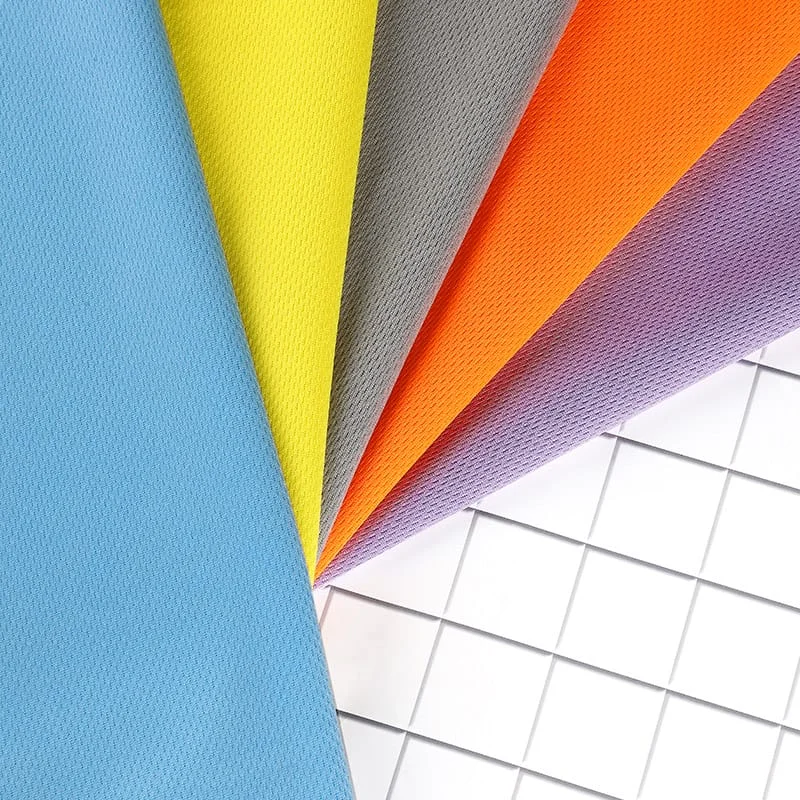
Bird's Eye Mesh:
- Small diamond-pattern holes
- Excellent breathability
- Durable structure
- Professional appearance
Huada Product:
- HD8001 Bird's Eye Mesh (135gsm, 100% Polyester)
- Lightweight, breathable
- Distinctive pattern
- Quick-dry
- Ideal for running tops
Athletic Mesh:
- Dense small perforations
- Balance durability and breathability
- Team sports compatible
Huada Product:
- HD8306 Matte Small Mesh (150gsm, 100% Polyester)
- Quick-dry matte finish
- Good opacity
- Durable
Eyelet Mesh:
- Larger decorative holes
- Maximum ventilation
- May require lining for modesty
Huada Product:
- HD6850 Eyelet Mesh (170gsm, 92/8 Poly/Spandex)
- 4-way stretch
- Excellent breathability
- Decorative pattern
Lightweight Jersey
Characteristics:
- Smooth surface
- Moderate breathability
- Versatile
- Lower cost than mesh
Best For:
- Casual runners
- Cooler weather
- Multi-sport use
- Budget-conscious brands
Huada Products:
- HD7928 Cotton-like Jersey (170gsm, 95/5)
- HD8039 Milk Silk (180gsm, 95/5)
- HD7887 Fish Scale (180gsm, 100% Poly)
Ultra-Lightweight Technical Fabrics
For Serious Runners:
- 100-130gsm range
- Maximum performance
- Competition-focused
Huada Product:
- HD8399 Ultra-thin (120gsm, 100% Polyester)
- Lightest option
- Professional racing
- Fast-drying
Fabric Weight by Running Type
Sprint/Track (100-135gsm)
Needs:
- Absolute minimum weight
- Maximum breathability
- Short duration (weight matters most)
Recommendations:
- HD8399 (120gsm)
- HD8001 (135gsm)
Road Running (135-160gsm)
Needs:
- Balance of performance and durability
- Good moisture management
- Versatile for different conditions
Recommendations:
- HD8001 (135gsm)
- HD8306 (150gsm)
- HD6850 (170gsm)
Trail Running (160-180gsm)
Needs:
- More durable (brush, branches)
- Still breathable
- Adequate coverage
Recommendations:
- HD6850 (170gsm)
- HD7928 (170gsm)
- HD7887 (180gsm)
Cool Weather Running (180-220gsm)
Needs:
- Light insulation
- Still wicking
- Comfortable in 40-60°F
Recommendations:
- HD8039 (180gsm)
- HD8193 (170-180gsm)
Polyester: The Ideal Running Fiber
Why Polyester Dominates
Moisture Properties:
- Hydrophobic (repels water)
- Moisture regain: <0.4%
- Wicks rather than absorbs
Drying Speed:
- 2-3 hours typical
- Cotton: 6-8+ hours
- Critical for comfort
Durability:
- Resistant to bacteria/mold
- Color-fast
- Shape retention
- 100+ wash cycles typical
Cost:
- Affordable
- Widely available
- Consistent quality
Addressing Odor Concerns
The Problem:
- Polyester can retain odor-causing bacteria
- Cotton naturally antimicrobial
Solutions:
- Antimicrobial treatments: Silver ion most common
- Wash promptly: Don't let sweaty garments sit
- Vinegar rinse: 1/4 cup white vinegar in wash cycle
- Proper drying: Bacteria grows in damp fabric
Huada Options:
- Antimicrobial treatments available on request
- Silver ion technology
- Durable through 50+ washes
Seasonal Considerations
Summer/Hot Weather
Requirements:
- Maximum breathability
- Ultra-lightweight
- Fastest drying
- Minimal coverage
Fabric Choices:
- Mesh fabrics (HD8001, HD8306)
- Ultra-lightweight (HD8399)
- Light colors for sun reflection
Spring/Fall
Requirements:
- Versatile weight
- Moderate breathability
- Comfortable range
Fabric Choices:
- Lightweight jerseys
- HD6850 Eyelet Mesh
- HD7928 Jersey
- 150-180gsm range
Winter
Requirements:
- Light insulation layer
- Still wicking (sweat still happens)
- Wind resistance helpful
Fabric Choices:
- Medium-weight jerseys (180-220gsm)
- Brushed interior for warmth
- HD8066 Sweatshirt knit (base layer)
Strategic Fabric Placement
Modern running tops use multiple fabrics:
High-Sweat Zones (Mesh):
- Underarms
- Upper back
- Center back panel
Moderate Zones (Standard):
- Front chest
- Sleeves
- Lower back
Design Benefits:
- Ventilation where needed most
- Professional appearance front
- Cost optimization
Color Considerations
Light Colors
Advantages:
- Reflect sunlight (stay cooler)
- Less heat absorption
- Preferred for hot weather
Challenges:
- Show sweat more obviously
- May show sports bra/undergarments
- Require heavier weight for opacity
Dark Colors
Advantages:
- Hide sweat stains
- Professional appearance
- Can use lighter weights
Challenges:
- Absorb heat
- Warmer in sun
- Fade over time (check color fastness)
Bright/Neon Colors
Advantages:
- High visibility for safety
- On-trend for running
- Motivating aesthetic
Considerations:
- Ensure color fastness (bright colors can fade)
- AATCC Grade 4+ required
Testing Standards
AATCC Test Method 195 (Moisture Management)
What It Measures:
- Wetting time (how fast moisture spreads)
- Absorption rate
- One-way transport (wicking from skin side to outer)
- Drying rate
Interpretation:
- Grade 1-5 scale
- Grade 4+: Excellent moisture management
- Grade 3: Acceptable
- Below 3: Poor for running
Request from Suppliers:
- Test reports for moisture management
- Especially for premium/technical lines
Breathability (Air Permeability)
ASTM D737 Testing:
- Measures cubic feet per minute (CFM)
- Higher CFM = better breathability
Targets:
- Mesh: 100-300+ CFM
- Jersey: 40-80 CFM
- Tightly woven: 10-40 CFM
Huada Running Fabric Recommendations
Maximum Performance
HD8001 Bird's Eye Mesh (135gsm)
- Excellent breathability
- Quick-dry
- Lightweight
- Professional appearance
HD8306 Matte Small Mesh (150gsm)
- Quick-dry matte finish
- Good opacity
- Durable structure
Versatile All-Purpose
HD6850 Eyelet Mesh (170gsm, 92/8)
- 4-way stretch comfort
- Good breathability
- Decorative pattern
- Multi-sport use
HD7928 Cotton-like Jersey (170gsm, 95/5)
- Soft comfortable feel
- Good moisture-wicking
- Affordable
- Versatile
Competition/Racing
HD8399 Ultra-thin (120gsm)
- Absolute lightest
- Maximum performance
- Serious runners
- Racing singlets
Common Mistakes to Avoid
Mistake #1: Using Cotton
- Absorbs sweat, stays wet
- Heavy when saturated
- Causes chafing
- Never for serious running
Mistake #2: Too Heavy
- Fabrics >200gsm too warm for most running
- Slows moisture evaporation
- Uncomfortable in heat
Mistake #3: Ignoring Breathability
- Solid, tight fabrics trap heat
- Overheating during runs
- Mesh/ventilation essential
Mistake #4: Poor Color Fastness
- Bright colors that fade quickly
- Customer dissatisfaction
- Specify AATCC Grade 4+
Conclusion
Running fabric selection prioritizes moisture-wicking, breathability, and lightweight construction. Polyester dominates for its superior moisture management and quick-dry properties, with mesh constructions offering maximum breathability.
Key Takeaways:
- Polyester is ideal - Superior wicking and drying
- Lightweight is critical - 100-160gsm for tops
- Mesh for serious runners - Maximum breathability
- Quick-dry essential - 2-3 hour drying time
- Test moisture management - AATCC 195 testing
At Huada Creation, our running-focused fabrics from ultra-lightweight HD8399 (120gsm) to versatile HD6850 eyelet mesh deliver the moisture management, breathability, and quick-dry performance runners demand.
Shop Running Fabrics: